For decades, creatine has been one of the most trusted ingredients in sports nutrition. Now, a newly published US patent moves it into a more compelling space for longevity-focused product development: telomere maintenance.
4POTENTIA® has been issued a US patent US 2026/0124165 A1, titled “Compositions Comprising Creatine for Use in Telomere Lengthening” and attributed to inventor Sergej Ostojic. Published in May 2026, it connects creatine with a cellular-aging pathway that is already familiar to many healthy-aging brands.
For partners formulating with Creavida® creatine, this creates a new angle worth paying attention to, especially in products built around cellular energy, healthy aging, and longevity support.
What the Patent Covers
In practical terms, the patent focuses on the use of creatine, and closely related creatine forms, to help support telomere length.
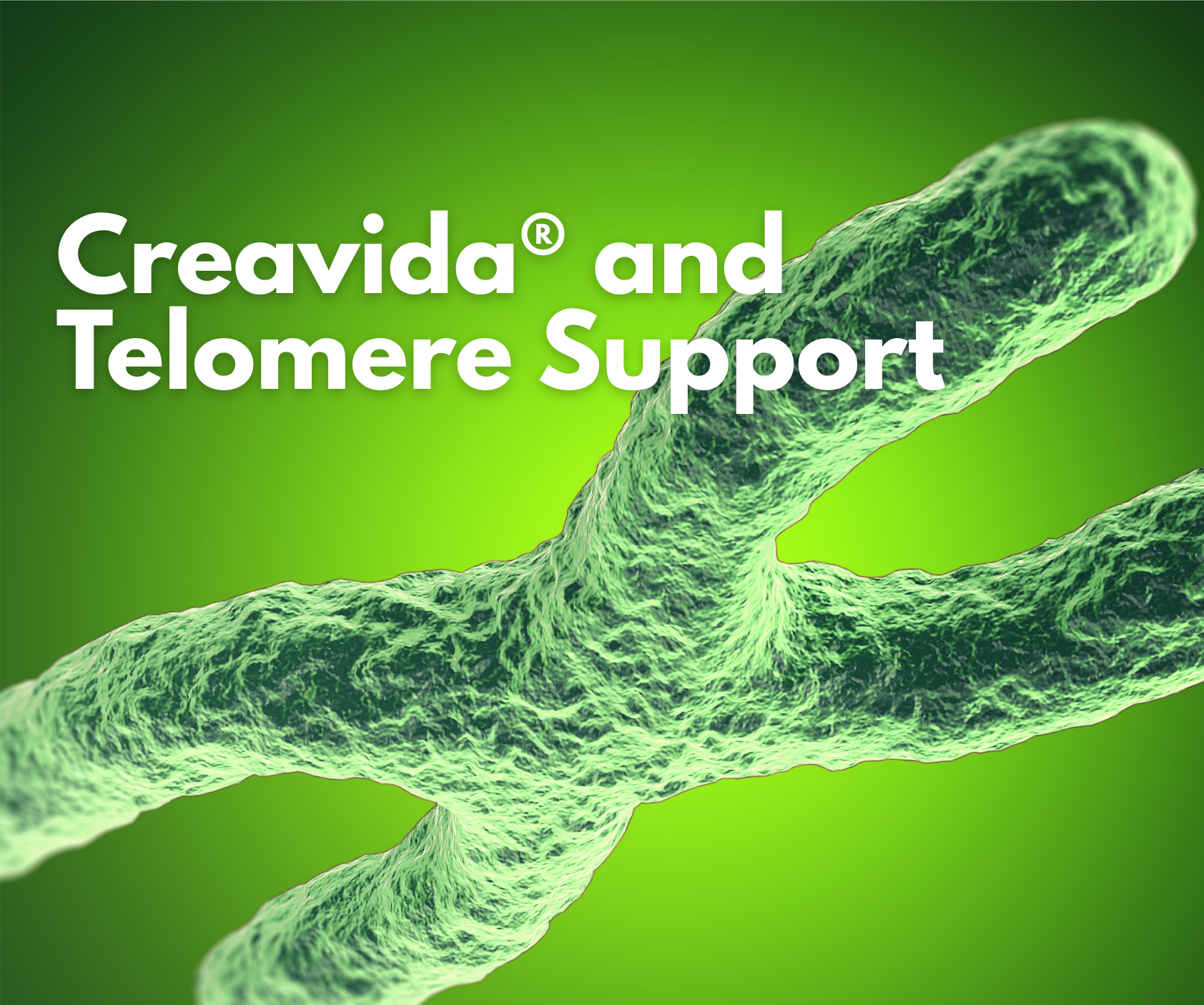
Telomeres are the protective caps at the ends of chromosomes, often compared to the plastic tips on shoelaces. As we age, telomeres naturally shorten, and this shortening is closely linked to cellular aging.
Creatine is already well known for its role in cellular energy production. The new angle explores whether creatine may also help support the maintenance of these chromosome-protective structures.
From a product-development perspective, the patent is broad. It references everyday creatine doses, ranging from 1 to 4 g per day, and includes familiar delivery formats such as:
- Powders
- Capsules and tablets
- Functional foods
- Bars
- Beverages
- Dairy-based products
For brands, this creates meaningful flexibility. Creavida® can be positioned not only asa trusted creatine ingredient, but as part of a differentiated formulation strategy for longevity, cellular energy, and healthy aging products.
The Evidence Behind the Patent
The patent is built around three 12-month randomized controlled trials, each exploring creatine’s potential relationship with telomere length.
In adults aged 50, daily supplementation with 2.5 g of creatine was associated with a significant increase in telomere length, while the placebo group showed a decline.
- In smokers aged 30-50, a combination of 1.5 g creatine plus 1.5 g guanidinoacetic acid showed significant increases in both telomere length and brain creatine levels.
- In adults aged 65 and older, 2.5 g of creatine per day showed a trend toward higher telomere length versus placebo, at approximately 4.65%, although the result didn’t reach statistical significance.
Why This Matters for Formulators
Creatine is familiar. That is one of its strengths. But familiarity can also make differentiation difficult.
This patent telomere angle gives formulators a more distinctive way to position creatine beyond strength, performance, and recovery.
For longevity and healthy-aging brands, the opportunity is threefold:
- A more differentiated creatine story
The application helps move creatine into a broader cellular-aging conversation, where the ingredient landscape is still developing and brand narratives are less crowded. - Flexible product development
The application references a broad range of creatine forms, doses, and delivery formats. That opens the door for use across commercial formats such as powders, capsules, gummies, RTDs, bars, and functional foods.
For product developers, this means the concept can be adapted to different audiences, price points, and usage occasions. - Evidence-linked credibility
The position is tied to human clinical work, named inventorhip, and a published US patent application, giving brands a stronger foundation than a trend-led marketing claim.
A note on claims and compliance
The patent discusses creatine in relation to telomere support and telomere length. Finished-product messaging still needs to follow the regulatory framework in each target market.
In practice, claims should stay focused on appropriate healthy-aging, cellular-energy, and structure/function language, without implying disease prevention, disease treatment, or the reversal of aging.
We help partners build compelling product stories while staying inside those lines.
Working with Creavida®
For brands developing products in longevity, healthy aging, active aging, or cellular energy, Creavida® offers a patent-protected, distinctive creatine platform supported by a new telomere angle.
It brings together three qualities partners look for:
- A well-known, well-tolerated ingredient
- Practical dosing and format fexibility
- A differentiated, evidence-linked story for the longevity category
To discuss formats, dosing, positioning, and co-marketing opportunities, get in touch with the Creavida® team.
