
Cinnamon is one of the most widely used botanicals in metabolic health formulations. Yet despite its familiarity, the category remains highly variable—defined by differences in species, sourcing, processing, and compositional consistency.
As regulatory expectations increase and brands place greater emphasis on evidence-based positioning, formulators are reassessing how cinnamon ingredients are selected, specified, and supported within finished products.
Moving Beyond Tradition-Only Ingredient Selection
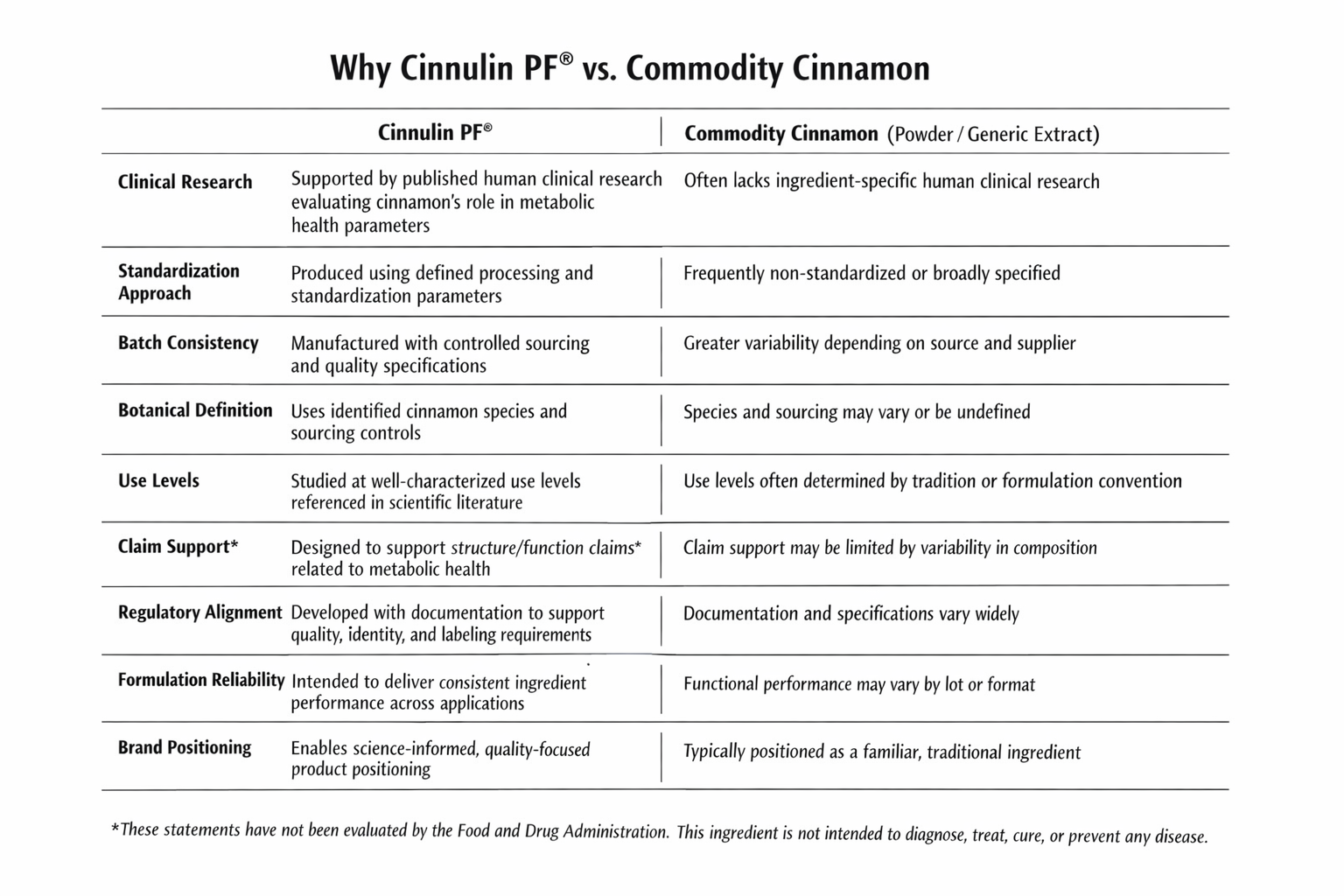
Many cinnamon ingredients currently used in dietary supplements are selected based on historical use rather than ingredient-specific scientific evaluation. These materials may vary significantly in polyphenol composition, botanical definition, and batch consistency—factors that can influence formulation predictability and documentation readiness.
In contrast, some cinnamon extracts have been developed with greater emphasis on characterization, standardization, and evaluation within human research settings. One such ingredient, Cinnulin PF®, was recently recognized as a Top Pick in ConsumerLab’s 2025 cinnamon supplement review, reflecting its distinct positioning within a highly commoditized category.
Why Clinical Research Matters to Formulators
For formulation teams, ingredient selection increasingly involves more than supply availability or historical precedent. Considerations now commonly include:
- Ingredient identity and specification clarity
- Reproducibility of composition
- Availability of published research
- Alignment with structure/function claim frameworks*
- Quality documentation to support regulatory review
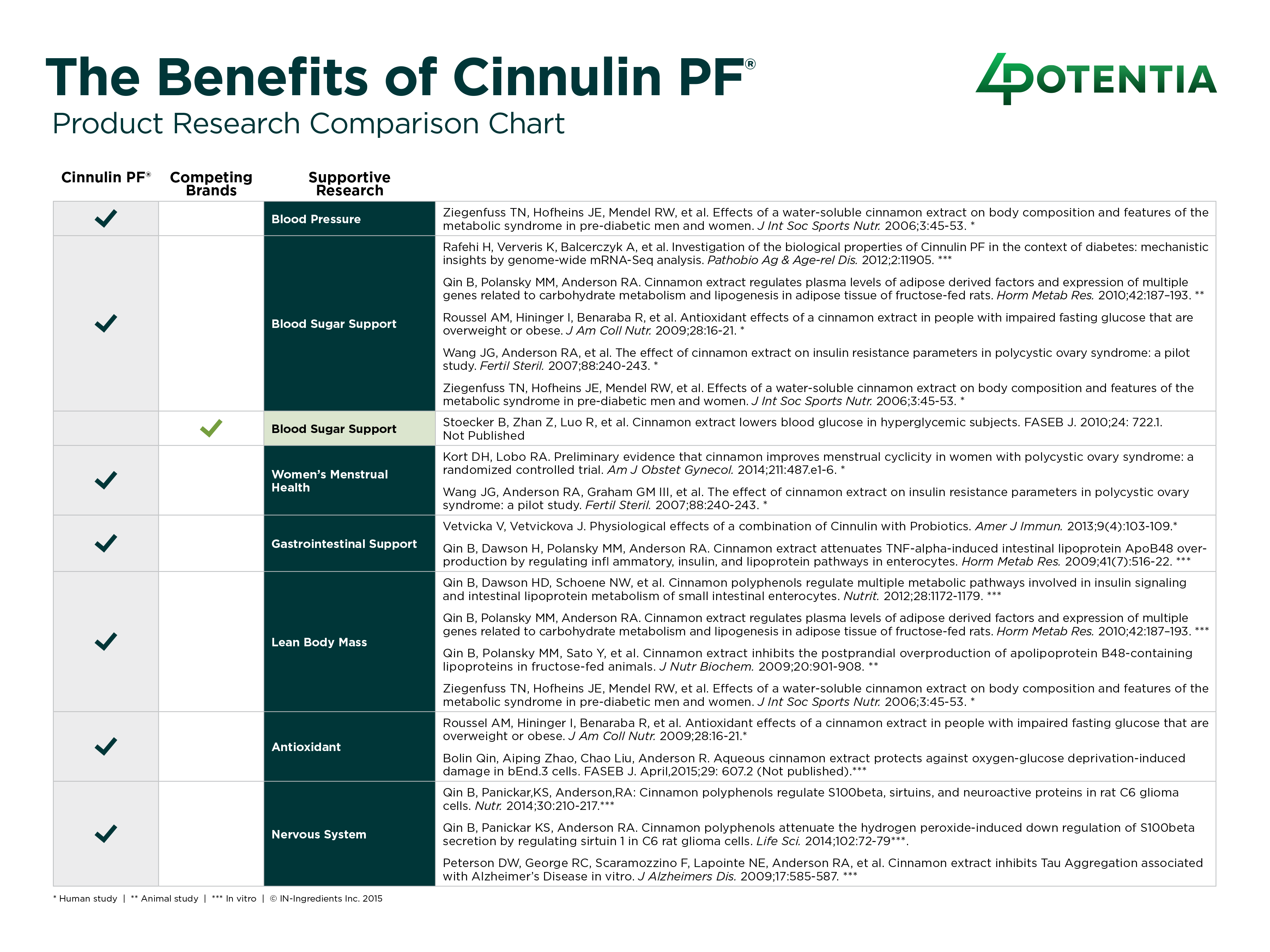
Cinnulin PF® is supported by published human clinical research evaluating cinnamon’s role in metabolic health parameters, including support for healthy glucose metabolism and insulin function*. This research-informed approach provides formulators with additional context when developing products intended for evidence-based positioning.
Ingredient Differentiation in a Commodity-Heavy Category
Cinnamon remains one of the most familiar—but least consistently defined—botanical ingredients on the market. Variability in species selection, processing methods, and standardization can introduce formulation challenges, particularly for brands seeking consistency across production runs or long-term product lines.
Cinnulin PF® was developed with defined sourcing, processing controls, and compositional specifications intended to support batch-to-batch consistency and predictable formulation behavior.
Formulation and Regulatory Considerations for Modern Brands
As consumer expectations shift toward transparency and regulatory oversight increases, ingredient documentation and compositional clarity have become central to product development decisions.
Cinnulin PF® is supported by technical documentation intended to assist with quality review, formulation planning, and labeling considerations. The ingredient is already utilized in commercially available dietary supplements, reflecting its compatibility with real-world manufacturing and compliance environments.
For formulators, this approach supports:
- Clean-label formulation strategies
- Science-informed product narratives
- Consistent ingredient specifications over time
A Broader Shift in Botanical Formulation
Recognition from third-party evaluators such as ConsumerLab reflects a broader industry movement toward botanicals that are more clearly defined, consistently produced, and supported by published research.
For brands developing next-generation metabolic health and wellness products, ingredient selection is increasingly about balancing tradition with documentation, consistency, and long-term formulation reliability. In this context, clinically studied cinnamon extracts like Cinnulin PF® represent an evolution in how familiar botanicals are evaluated and applied.
*These statements have not been evaluated by the Food and Drug Administration. This ingredient is not intended to diagnose, treat, cure, or prevent any disease.
